

Workforce Pell rises and falls on verified outcomes
Effective July 20, 2026, programs of at least 8 and fewer than 15 weeks can draw Pell, but only with a verified 70 percent completion and placement record and a value-added earnings pass.
Read the full Final Rule breakdown for every section and the action list.
Quick answer
How many programs have qualified for Workforce Pell?
Workforce Pell opened July 1, 2026 with roughly $1.5 billion behind it. One program has qualified. The Department approved a 14-week emergency medical technician certificate at Iowa Central Community College on August 4, 2026, and it was still the only federally approved program six days later. The barrier is outcomes data, not program quality.
Last updated August 11, 2026. Approval status per the Workforce Pell implementation tracker as of August 10, 2026, and the August 4, 2026 approval announcement.
The State of Play
A billion-dollar program with one approval
$1.5B
Estimated federal investment over ten years, at about $2,200 per recipient
1
Federally approved Workforce Pell programs as of August 10, 2026
28
Jurisdictions with an operational approval process, with 18 in progress and 6 with no verifiable public action
28,000
Existing undergraduate certificate programs the Department estimates could qualify on length alone
The $1.5 billion and $2,200 figures come from the National Governors Association overview for Governors, March 2026, citing the Congressional Budget Office. NGA scales that total from the CBO score of $298 million in mandatory Pell dollars over 2025 to 2034, because mandatory dollars are roughly 20 percent of all Pell spending. In its own Final Rule analysis the Department of Education projected 184,000 new recipients in the first projected year rising to 191,000, a net budget impact of $3.2 billion for FY 2027 to FY 2036, up to 28,000 existing certificate programs eligible on length, and as many as 2,200 new programs created in response.
The gap between the money available and the programs approved is a measurement gap. Governors certify completion and placement from administrative wage records, and most institutions have never tracked what happens to noncredit students after they leave. That is the same problem set out in our report on the first-destination data gap, and it is why the first mover here was a college that could already produce the numbers.
What Is the Workforce Pell Grant?
Workforce Pell was created by the law signed July 4, 2025, referenced as the One Big Beautiful Bill Act and enacted as the Working Families Tax Cuts Act, then codified by the Department of Education Final Rule published May 19, 2026 (Docket ID ED-2026-OPE-0133, 34 CFR Parts 600, 668, and 690). It extends Pell Grant eligibility for the first time to short-term workforce programs of 150 to 599 clock hours and at least 8 but fewer than 15 weeks of instructional time, leading to a stackable, portable recognized postsecondary credential aligned with high-skill, high-wage, or in-demand occupations.
Two approvals are required. The state Governor approves after consulting the workforce board, and the Secretary of Education approves after that. Transitional 70% completion and placement standards apply for the 2026–27, 2027–28, and 2028–29 award years under 34 CFR 690.94(a)(2)(i), with the value-added earnings test at 34 CFR 690.95 capping tuition and fees at completer earnings minus 150% of the federal poverty line. Students with a bachelor's degree are eligible; students with a graduate credential are not. Applications opened for the 2026 to 2027 award year on July 1, 2026, and the rule took effect July 20, 2026. For the broader compliance picture, see our full guide, and for the earnings accountability rule that governs degree programs see the STATS and Do No Harm explainer.
What Changed
What Workforce Pell Actually Requires
The requirements are specific. Get them right and you unlock Pell funding for programs that have never had it. Get them wrong and your programs lose eligibility.
Program Requirements (DoE)
- Length150 to 599 clock hours; 8 to under 15 weeks of instructional time
- HistoryMust have been offered for at least 12 months before applying
- Completion + placementVerified annually against state-defined rates set by the Governor (Section 690.94(b))
- Value-added earningsTuition + fees cannot exceed completer earnings minus 150% federal poverty line (Section 690.95)
- AccreditationInstitution must be accredited and Title IV-eligible
- CreditsMust count toward a certificate or degree at the same institution
- FormatNo correspondence, study abroad, or direct assessment
State Requirements (Governor Approval)
- AlignmentProgram prepares students for high-skill, high-wage, or in-demand occupations
- Employer matchProgram meets hiring requirements of employers in the aligned sector
- PortabilityCredential is stackable and portable across employers
- ApprovalState Governor must certify program eligibility (after consulting state workforce board)
- RenewalGovernor approval expires at end of PPA, must recertify
Key note. Students with bachelor's degrees can receive Workforce Pell Grants, unlike traditional Pell. Workforce Pell still counts toward a student's lifetime Pell eligibility of 12 semesters, so students should understand the trade-off. Applications opened July 1, 2026 for the 2026–27 award year. State approval processes vary widely. As of August 10, 2026, 28 jurisdictions had an operational approval process, 18 were in progress, and 6 had no verifiable public action, with published occupation lists ranging from 15 to 393 entries. Track your state on the Workforce Pell implementation tracker.
The Hard Part
Why the second-quarter window changes everything
The rule counts a completer as placed if they are employed during the second quarter after exiting the program, which is roughly the 180-day mark in practice. Career services teams at community colleges and training providers are already stretched. Running that follow-up systematically for every short-term completer, and verifying employment across multiple sources, takes infrastructure most teams do not have.
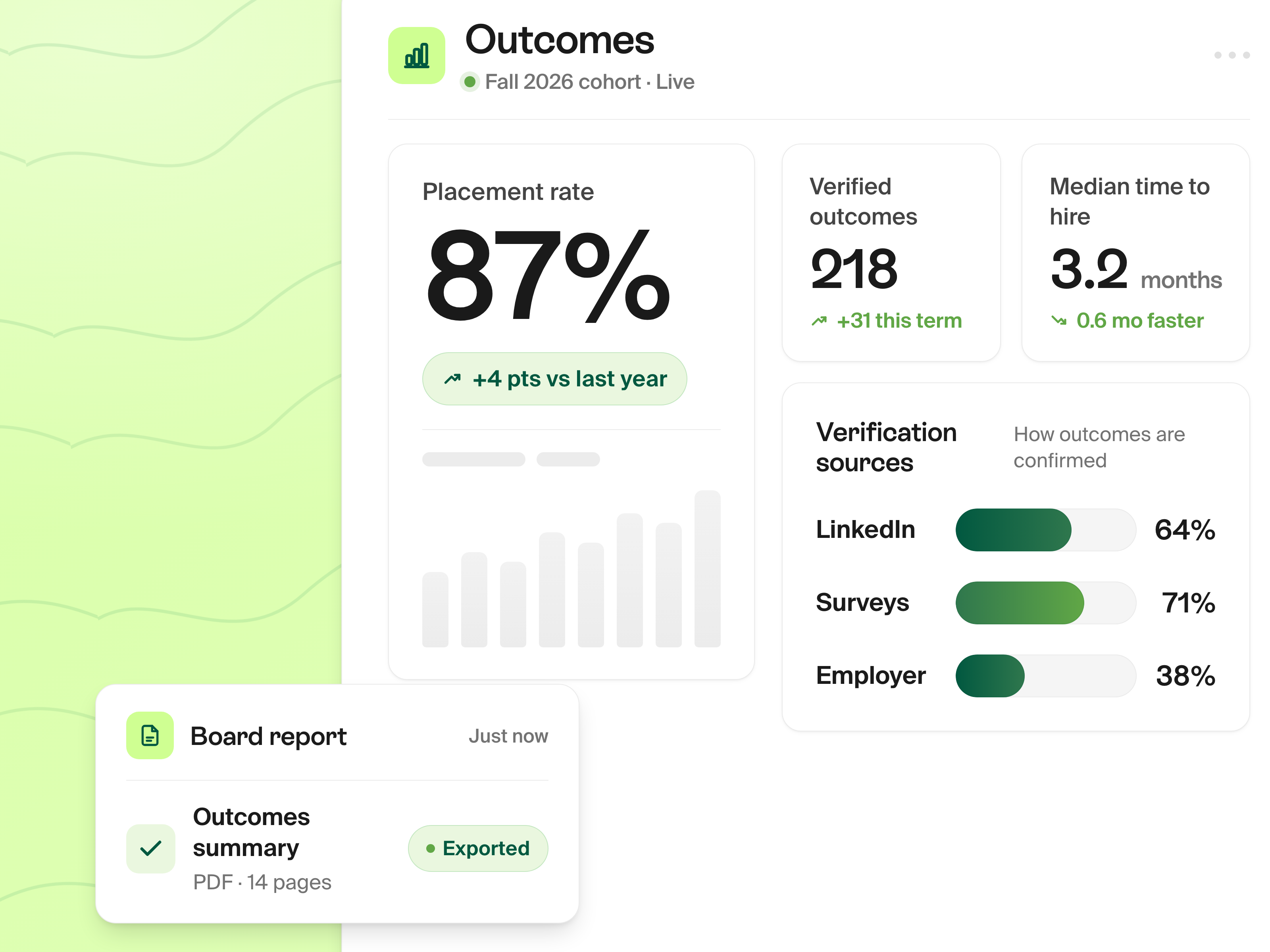
Prentus tracks placement automatically with a monthly LinkedIn scan backed by dozens of verification sources, plus built-in surveys that go out by email and SMS with no staff hours required, so the measurement window runs in the background. Your team sees which completers are placed, which are not, and which still need outreach.
Book a DemoStudent completes program
Prentus starts the tracking clock automatically at exit, so the second-quarter measurement window is covered from day one.
Automatic verification runs continuously
Prentus detects employment status and employer name from LinkedIn plus dozens of other sources, with AI surfacing legitimate matches for staff review, and built-in surveys fill in the rest automatically with no staff hours.
Advisors see who needs outreach
At 90 and 150 days, advisors see a prioritized list of graduates with no detected employment, so outreach is targeted, not mass.
Placement report generates automatically
Your verified placement rate and completer list are ready for Governor certification and the Department submission. No compilation required.
Who Workforce Pell Affects Most
Community Colleges
Certificate and workforce programs that have never had Pell access can now unlock federal grant funding, but only with verified outcome data. Career services teams already stretched across tens of thousands of students now carry a new compliance layer.
High urgency. Short-term programs are central to your enrollment model.
Career Training Programs
Bootcamps, technical training providers, and apprenticeship programs that run 8–15 week programs can qualify for the first time. The 70% placement requirement is achievable if you track it.
High urgency. This changes your tuition funding structure.
Workforce Development Orgs
WIOA-funded programs and workforce development organizations offering short-term training now face a federal placement tracking requirement aligned with Pell eligibility. Prentus integrates with WIOA reporting workflows.
Medium urgency. It depends on your Pell participation status.
Get a Free Outcomes Diagnosis
Bring your completion and placement numbers. Leave with a maturity assessment against the Workforce Pell Final Rule and a gap plan for the 70% threshold. 30 minutes, no sales pitch.
Get a Free Outcomes DiagnosisHow Prentus Helps
Built to keep your programs eligible
Workforce Pell rises and falls on the data. Verified placement, value-added earnings, Governor-ready submissions. Prentus runs that infrastructure as part of your career services stack.
Automatic placement verification
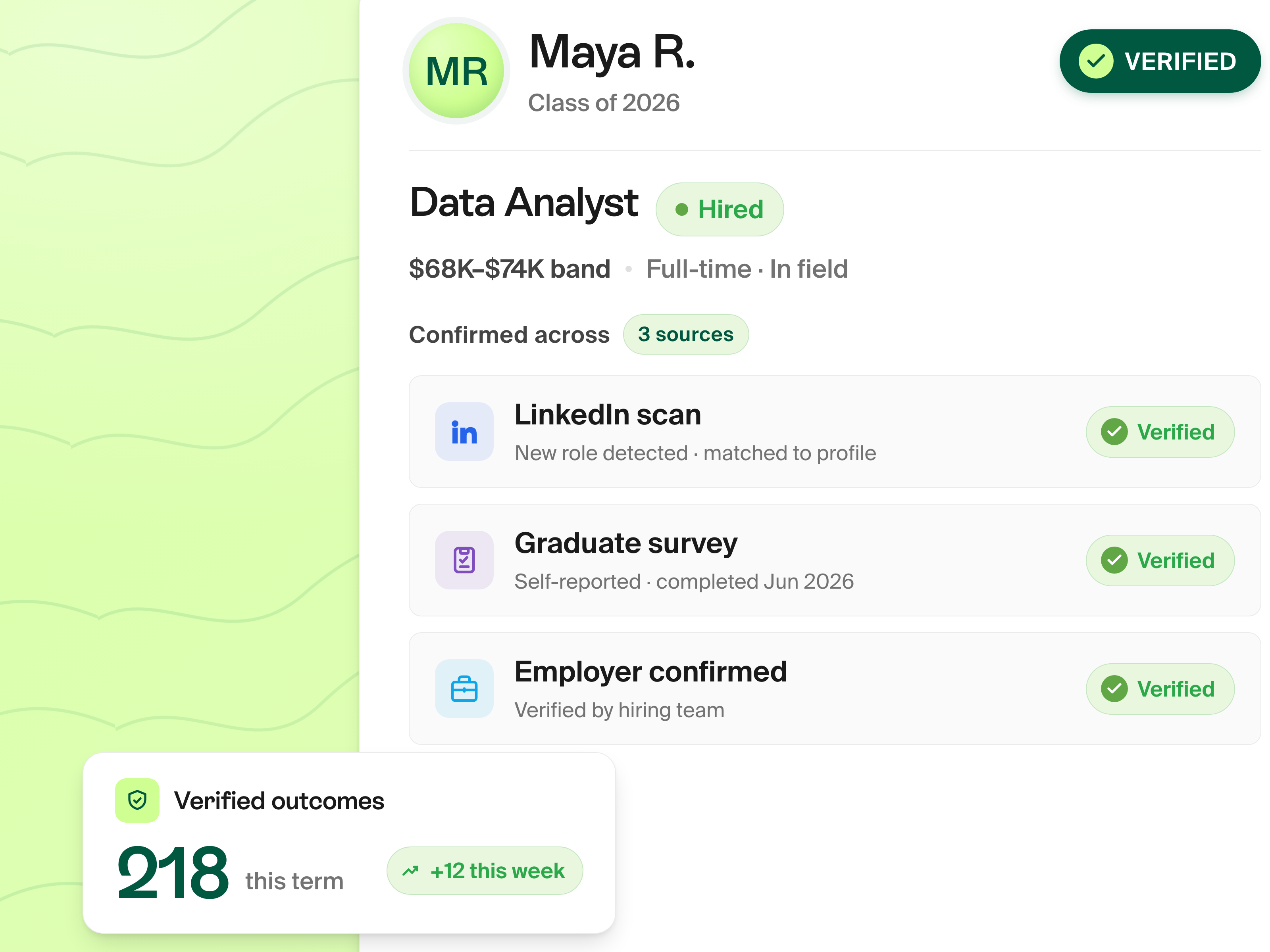
Every completer is scanned automatically each month through LinkedIn, backed by dozens of third-party sources that verify employment. AI reviews the matches and surfaces legitimate outcomes for staff review, giving you the employer name, title, and start date that a Workforce Pell application under Section 690.94(b) requires. Built-in surveys by email and SMS fill in the rest automatically, with no added staff hours.
Governor-ready reporting
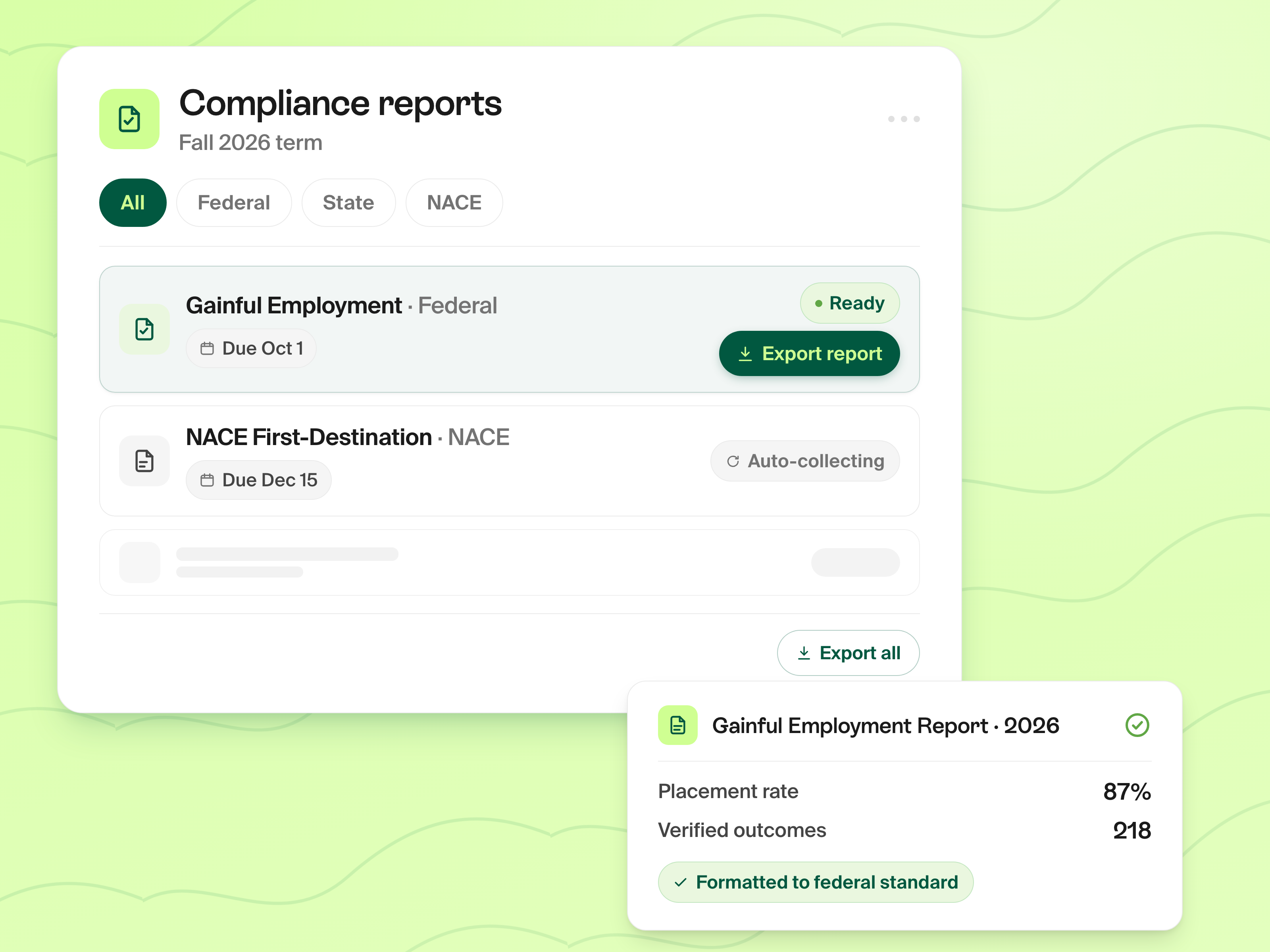
Generate the completer list and placement-rate evidence in the format your state workforce board can act on. No spreadsheet merge at re-certification time.
Value-added earnings watch
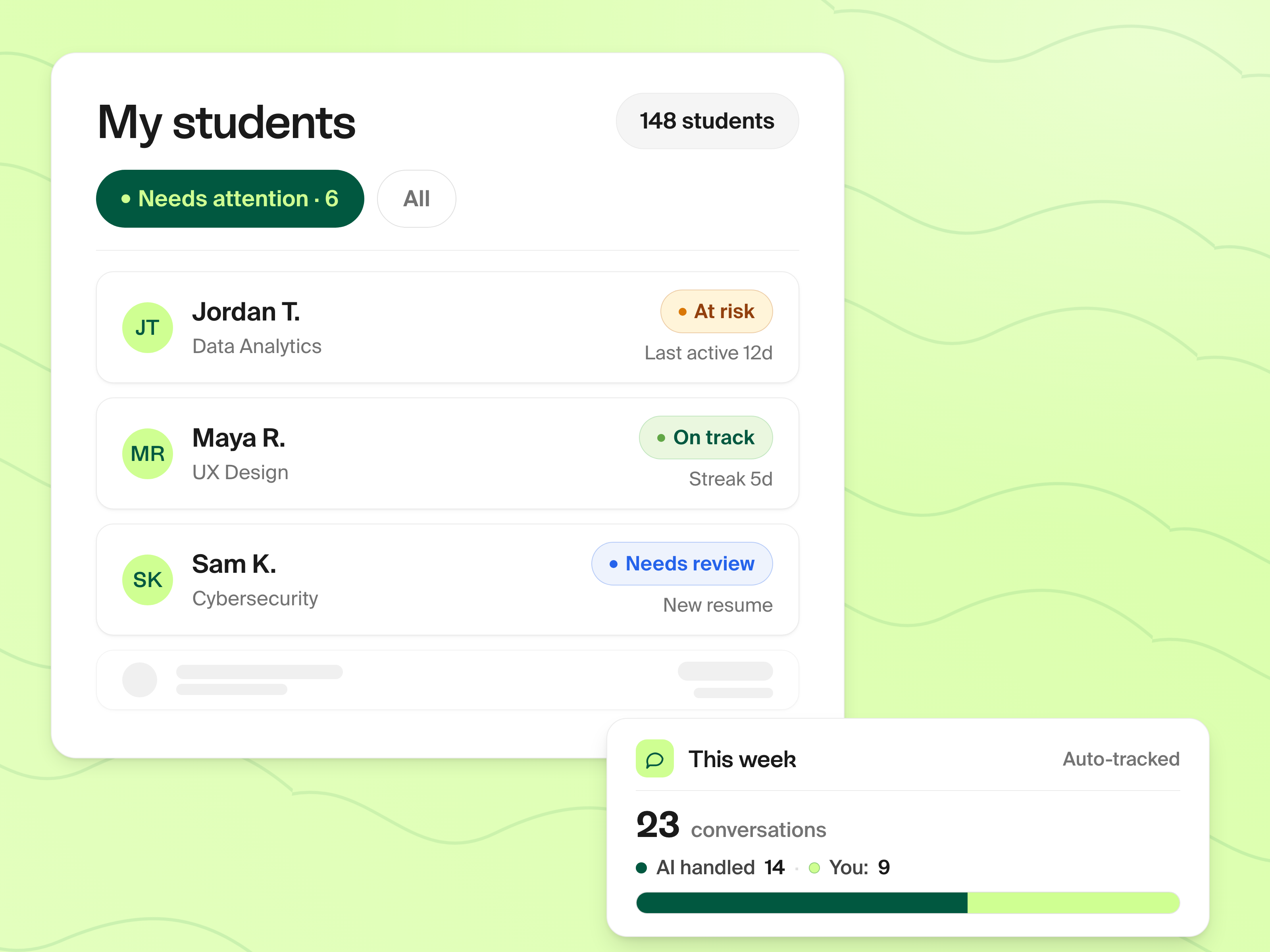
Section 690.95 caps tuition at completer earnings minus 150% of the federal poverty line. Prentus flags programs trending toward a negative value-added earnings number months ahead.
Free Sample
Check your placement coverage
Run a free outcomes scan on 25 graduates and see the sources.
Run a Free Outcomes ScanThe Old Way vs the Prentus Way
✗ Manual 180-day tracking
- ✗Email surveys to all graduates at 6 months, with a 20 to 30% response rate
- ✗Staff manually follow up with non-responders via phone and email
- ✗No way to verify employment, so you take students at their word
- ✗Data lives in spreadsheets that can't be audited
- ✗Report compilation takes weeks before a Governor certification deadline
- ✗Programs fly blind on placement rates until it's too late to intervene
 Prentus automated tracking
- ✓Automatic LinkedIn scans and dozens of verification sources run continuously, with AI surfacing matches for review
- ✓Advisors only do outreach when automatic detection and built-in surveys turn up nothing
- ✓Employment verified against actual job titles and employer names
- ✓Audit-ready data with timestamps and verification source
- ✓180-day report generates automatically with a click
- ✓Flag programs at risk of missing the 70% threshold at 90 days, while there is still time to act

“The most interconnected, well-integrated tools that do the hard work but keep our advising team at the center.”Richard Korczyk, Chief Experience Officer
Common Questions
Workforce Pell FAQ
What is the Workforce Pell Grant?
Workforce Pell extends Pell Grant eligibility for the first time to short-term workforce programs that run at least 8 but fewer than 15 weeks and deliver 150 to 599 clock hours of instruction. It was created by the law signed July 4, 2025 and codified by the Department of Education Final Rule published May 19, 2026 at Docket ID ED-2026-OPE-0133, effective July 20, 2026 except for amendatory instructions 10 and 13, which took effect on publication. Applications opened for the 2026 to 2027 award year on July 1, 2026.
How many programs have qualified for Workforce Pell?
One. The Department approved the nation's first Workforce Pell program on August 4, 2026, a 14-week emergency medical technician certificate at Iowa Central Community College. As of the Workforce Pell implementation tracker update on August 10, 2026 it was still the only federally approved program, while 28 jurisdictions had an operational approval process, 18 were in progress, and 6 had no verifiable public action. Pennsylvania had state-approved 2 of the 40 programs its institutions submitted.
What placement rate is required for Workforce Pell eligibility?
For the 2026–27, 2027–28, and 2028–29 award years, 34 CFR 690.94(a)(2)(i) requires Governor certification that the program has a completion rate of at least 70 percent within 150 percent of normal time to completion, and a job placement rate of at least 70 percent, calculated as the percentage of students employed during the second quarter after exiting the program using administrative data including wage records. The Governor makes that determination from state wage records, so your job is a defensible completer list and placement evidence.
What is the value-added earnings test in the Final Rule?
Under 34 CFR 690.95, a program's total published tuition and fees may not exceed its value-added earnings, which is the difference between the adjusted median earnings of completers during the earnings measurement period and 150 percent of the U.S. Federal Poverty Guidelines for a single individual. A program with a value-added earnings of zero or a negative value is not an eligible program. The Secretary publishes each figure no later than three months before the award year begins.
How much federal money is behind Workforce Pell?
The National Governors Association, citing the Congressional Budget Office, estimates roughly $1.5 billion in federal investment over ten years at about $2,200 per recipient, prorated by program length and student need. NGA scales that from the CBO score of $298 million in mandatory Pell dollars over 2025 to 2034, since mandatory dollars are about 20 percent of all Pell spending. The Department's own Final Rule analysis projected 184,000 new recipients in the first projected year rising to 191,000, and a net budget impact of $3.2 billion for FY 2027 to FY 2036.
Do we apply for Workforce Pell separately for each program?
Yes, and approval runs in two steps. The Governor certifies that the program meets the state standards after consulting the workforce board, then the Secretary of Education approves. Governor approval expires at the end of the program participation agreement and has to be recertified. Programs cannot be offered as correspondence courses, but otherwise online programs that meet the length requirements are eligible.
Sources
Every requirement, date, and figure on this page traces to one of these. Last updated August 11, 2026.
- Workforce Pell Final Rule, published May 19, 2026, effective July 20, 2026. Docket ID ED-2026-OPE-0133, 34 CFR Parts 600, 668, and 690
Source for program length, the transitional 70 percent completion and placement standards at 34 CFR 690.94(a)(2)(i), the second-quarter measurement, the value-added earnings test at 34 CFR 690.95, and the Department projections of 184,000 new recipients, 28,000 eligible existing programs, and a $3.2 billion net budget impact for FY 2027 to FY 2036.
- National Governors Association, Workforce Pell overview for Governors, March 2026
Source for the Congressional Budget Office estimate of approximately $1.5 billion over ten years at about $2,200 per recipient, scaled from the $298 million mandatory Pell score for 2025 to 2034.
- Office of the Governor of Iowa, first Workforce Pell approval, August 4, 2026
Source for the Iowa Central Community College 14-week emergency medical technician approval.
- Opportunity Data, Workforce Pell implementation tracker, updated August 10, 2026
Source for the 28 operational, 18 in progress, and 6 no-action jurisdiction counts, the occupation list range, and the Pennsylvania figure of 2 approvals out of 40 submissions.
Get a Free Outcomes Diagnosis
Bring your completion and placement numbers to a 30-minute working session. We look at where career support can fit into the programs, orientation, and advising you already run, then hand you a plan for the 70% threshold. No sales pitch.
Book a DemoOr read the Final Rule breakdown, see the full compliance hub, how gainful employment differs, the STATS and Do No Harm explainer, or our report on the first-destination data gap. For compliance updates in your inbox weekly, subscribe to the Weekly Workforce Wire.